We are living in incredibly busy times, that keep us overly-looped into our jobs, keeping up with all of our children’s school and sports events, household tasks, time for our partners, to the point that we rarely have time for authentic, one one one connections with our children. At our pediatric practice, we tend to get referrals for children that have issues with emotional regulation (often stemming from sensory processing issues),that negatively impacts their behavior.
While we often look to the foundational roots for any issue that we come across, considering diet and food sensitivities, retained primitive reflexes, and sensory processing issues, we also consider connection with the child to the parents. So, I invite you, as one parent to another and without judgement, to look at this aspect. How much time a day do you have with your child (or children) to fully connect with them? To play on their terms? To have 1:1 (screen and interruption free) time in the day? Time where you are not rushing from point A to point B, or doing the bed or morning routine?
This quality of this connection piece (or lack there of) may even be contributing to some of your child’s behavior. What if, in addition to the therapeutic support that your children receive, that you carve out time for them to just listen, be, or engage in any type of play that they prefer? I suggest experimenting with this.
As a parent (and an OT!), I have found myself in this predicament during my children’s own youth. Some days, after working with children, I would feel all “played out”, with little gas in the tank for my kids once I got home from work. At one point when my children were young, and I was working on the outskirts of Decatur, I literally did not see them during the day. I would wake them up and get them to school, go to work, and by the time I came home (my clients need after school hours), I would be kissing them and tucking them into bed. At this time in my life, I moved my practice closer to home, and made adjustments in my own schedule once I recognized the impact on my children and myself. Imagine: me working with other children all day and giving parents advice about connecting with their children when I barely saw my own? It was a real wake up call for me.
So parents, make the time to connect with your children in a present way. I say this as a parent with children who are now young adults–I still strive to make time to be with them, connect with them on their terms, and without any agenda. This phase that you are in with your child, although it may feel like it’s slow going, happens very quickly in the grand scheme of things. Taking the time to be with them, play with them, and connect with them on their terms and at their developmental level is so important. Put the screens away, stop looking at your emails, and whether it’s through imaginary play, board games, throwing or kicking a ball around, or just listening, be with your children. Even 15 minutes a day of uninterrupted time makes a significant impact.
Could Your Healing (as a Parent) Be a Missing Link in Your Child’s Growth?
Do you feel at a loss with how to help your child, especially if they have been struggling for a while? Do you have a tendency to get overwhelmed easily? If so, you are not alone. This is a problem that many parents face when their child (or children) are going through emotional, behavioral, and/or sensory challenges. So many times, as parents, we look to “fix” problems that are children are having. We pour resources, time, and energy into helping them. Into “fixing” problems in order to make their life–and the life of the family unit, in many cases–easier. What if there is another layer to helping our children that is just outside of our awareness as parents?
Over 29 years, I have witnessed (as an occupational therapist) parents struggling to meet the needs of their children, who are at their wits end themselves. And for 21 of those years, I have been a parent myself. What I have observed and experienced, is that the parents that take the time to get support for themselves (in a number of ways), seem to positively impact their children’s nervous system regulation. Another way to name this is co-regulation.
The National Institutes of Health (NIH) defines co-regulation as operating “from both behavioral (affective and cognitive) and biological (hormonal and nervous system) levels” (e.g., Bornstein and Esposito, 2023). Behavioral examples can include the tone of your voice, the openness of your physical posture, and the idea of using more presence and listening, over talking. Biological examples can include autonomic entrainment, such as described in Polyvagal Theory (e.g. Porges, 2022) of Stephen Porges (humans in close proximity attune to one another’s autonomic systems), neural synchrony (mirror neurons and neuron coupling to match patterns), and amygdala dampening and oxytocin release (creating warm vocal tones, and sustaining eye contact can boost oxytocin and reduce fear response/amygdala reaction).
So, what does all this mean, realistically?
When your child is in a stress response, take a few moments to calm yourself down before helping your child. I often suggest allowing your child to see you get regulated by taking deep breaths, slowing down, and even saying “I just need a few deep breaths before I come to help you”. Reducing extraneous environmental stimulation like lighting and noise, is also very helpful and effective.
Seek support for yourself when your cup is empty. Therapy, inner child work, regular exercise, journaling, eating a healthful diet, getting adequate sleep, “tapping out” with your spouse or co-parent when you need more support, scheduling social time with other adults, and being in nature are all incredibly supportive ways to get your needs met. Your child(ren) and family will feel this, as well.
Many times, we spend the better part of an hour helping children to achieve a more regulated nervous system, through our playful approach, connection, and sensory + reflex integration in our O.T. sessions–only to send children home to an unregulated family system.
Any efforts that you take to help yourself, will ultimately help your child, and your entire family. Caring for yourself as a parent changes the landscape of your home. Your children will have a better chance for nervous system regulation through your own regulation. I have witnessed this for many families as an occupational therapist, and have experienced this as a parent.
Bornstein MH, Esposito G. Coregulation: A Multilevel Approach via Biology and Behavior. Children (Basel). 2023 Jul 31;10(8):1323. doi: 10.3390/children10081323. PMID: 37628322; PMCID: PMC10453544.
Porges SW. Polyvagal Theory: A Science of Safety. Front Integr Neurosci. 2022 May 10;16:871227. doi: 10.3389/fnint.2022.871227. PMID: 35645742; PMCID: PMC9131189.
Summer Tips from an Occupational Therapist
Ah, summer. A little more flexibility in the schedule, perhaps a little more travel, and definitely being off of the academic year routine (for many). Make the most of this season to support your child with sensory processing issues. These are some things that I have recommended (and have used with my own children over the years).
After the initial decompression, late nights, sleeping in, general chill time, these are some suggestions that may help your child.
Using a visual schedule, or calendar. This is especially helpful if your child is navigating multiple camps or different schedules. You can verbally review the day, write it in a central place (chalk board wall, fridge dry erase magnet, or even a robust app like Skyline). This can really help soothe anxiety for children so they know what to expect each day. Try it out–it might surprise you!
Outdoor time, fresh air, connection with peers. Look for splash pads, public pools, playground or park gatherings, hiking, camping, and simple picnics.
Give your child some uninterrupted time, free from screens. Reading books together, tossing a ball, swimming, going for a bike ride, card games, board games, even just sitting together and talking.
Have accommodations, and “Plan B” on the ready. I recommend developing mental flexibility around outings and events. It’s OK to leave early when your child becomes overwhelmed. Keep a backpack or tote with backup clothing, extra sunscreen, wipes, and emergency snacks, and any other accommodations that support your child when in stress.
Allow for extra sleep and provide healthy snack and meal choices. This is fairly basic, but important. Consider magnesium over melatonin for sleep issues, and shopping at places like Trader Joe’s and Aldi for treats and frozen meals (as they don’t contain artificial food dyes and the preservatives in the frozen foods are much lower than the big brands).
Summer Through a Sensory Lens
I want to break down the sensory systems that we work with as occupational therapists, and spark some ideas of how to provide rich sensory input on the daily. Whether your child seeks out the sensory experiences, or avoids them (or both!), it is good to provide them with opportunities to get their needs met, or build tolerance, respectively. Many of these things overlap, and will be providing multi-sensory input.
Vision
Our visual system is, for many, is compromised with excessive screen use and indoor time. It’s incredibly important to give our children opportunities to expand their visual systems–and outdoors is the best place to be!
Keep sunglasses on hand for kids who are visually sensitive
Scavenger hunts (in nature)
Water balloon games: tossing, aiming at target
Ball games and sports, frisbee
Crazy straws (binocular vision)
Blowing bubbles and catching them on the wand
Blowing dandelions that have gone to seed
Soapy slip and slide
Being outdoors!
Touch/Tactile
This is a very important system with which we experience our world. It is strongly linked to emotional regulation. If your child experiences sensitivities to sand, clothing changes, wearing sunscreen, engage in a lot of the muscle/proprioception based activities below before and after the touch/tactile activities.
Sunscreen, bug lotion (use firm pressure if your child is sensitive, or let them help to rub it into their skin)
Body paint, face paint
Walking barefoot
Wearing rash guard shirts if sensitive about wearing less clothing
Sandcastles, mud pies
Loofahs, silicone scrubbers in the bath
Homemade slime, play dough
Baking, cooking
Lakes, ocean, creeks, pools
Running through the sprinkler
Movement/Vestibular
This sense helps us with attention, focus, and balance. We tend to be far more sedentary than is good for us, so keeping active this summer is real medicine for your children. This sense can overstimulate some kids (especially with spinning) if they get too much, engage in the muscles proprioception activities below afterwards.
Hammocks
Swings
Riding scooters, bikes
Wagon rides
Merry Go Round
Swimming
Amusement park rides
Practicing somersaults and cartwheels
Water slides, slip and slides
Trampoline, bouncy houses
Muscles/Body Awareness/Proprioception
This sense is unique; using the muscles and stimulating the joints of the body help the body get more information about itself (in regards to moving through space) for better coordination, and also can help to soothe and/or stimulate the nervous system to bring it into stasis. So, if you are tired, muscle activity can “bring you up” and if you are overwhelmed, muscle activity can “bring you down”. This is why this sense is so crucial, and it is hands down, the best thing to use with your child when in doubt.
Rock climbing, scrambling
Tree climbing
Monkey bars
Riding a bike
Paddling/kyaking
Animal walks: bear, tiger, crab, snake, cat, etc.
Yoga poses
Trampoline, jumparoo
Tug of War
Potato sack races
Hippity Hop bouncing ball
Swimming
Running races
Hand clapping games like “Mary Mac”
Oral Input
If your child is a nail biter, puts pens, clothing or hair in their mouth, it’s good to encourage alternative outlets for this sensory need. The need to chew *can* be linked to retained primitive hand reflexes, so if you notice this need (or if they are moving their mouth a lot) when drawing or crafting, have resistive snacks or chewy toys available.
Using crazy, silicone, eco, or stainless steel straws
This sense can really affect our level of regulation–so if your child needs accommodations such as headphones and ear plugs to participate, please allow them! Music can help to calm us down–especially organized classical music (Bach, Mozart), and binaural music, or rev up–depending on what we need at the moment.
Listening to music
Having earplugs and headphones to reduce noise for sensitive kids, during fireworks, loud sports games, loud concerts
Whispering games like “Telephone”
Freeze dance
Simon Says
White noise, noise machines, or fans to help with sleep
Outdoor concerts and festivals where there is a lot of green space to move (bring those headphones!)
Smell + Taste/Olfactory + Gustatory
As many of us have learned during the pandemic, these senses are very linked. Some children are very smell sensitive, so much so that it can limit places that they can be in. Others love to smell things; toys, objects, etc. to understand them.
Dye and scent free laundry soaps for sensitive children
With picky eating, exposure to the foods is great–over forcing bites or for them to eat a certain amount–such as handling, washing, helping with prep
Family style meals with the food on the table versus being brought a plate
For smell “seekers”, try working with natural scents and tastes: fresh lemon or lime, orange wedges, pepper flakes, kraut, and complex flavor profiles
Using essential oils versus synthetic fragrances (please note that you should treat essential oils like a medicine; keep them out of reach of your children, and if you are working with the oils, avoid undiluted direct skin contact)–nasal inhalers can work well for this!
Safety First
Children need to have a sense of safety before they can engage, explore, and connect with others across different environments. In the fast paced, on demand, high-expectation-of output kind of world that we are in, it’s an important angle to consider: “does my child feel safe?” and even a step before that, “do I feel safe?”.
With a lack of perceived safety, we all can get stuck in a fear response: the very primitive reflexive responses of “freeze”, where one can’t act, respond, or engage to the demands presented (this is linked to the Fear Paralysis Reflex, or, FPR). We can get triggered into creating safety for ourselves with “fight” or “flight”; by attempting to fight and/or run away from the situation (this is linked to the Moro reflex).
When in a state of fear, where lack of safety is perceived, we cannot access the higher brain centers that support learning and connections. When we do feel safe, we can better engage in exploration, socializing with peers, accessing our creativity, the willingness to make mistakes and try again, and even the ability to digest food (this could be a factor if your child brings home an uneaten lunch, even if its a favorite meal).
Maslow’s Hierarchy of Needs is a model that was presented in the mid 20th century as a way to acknowledge a heirarchy of collective societal needs. Physiological Needs sit at the bottom of the pyramid; with the most basic elements of biological survival: food, air, water, sleep, etc. The second level up is Safety: security, health, stability of environment, etc. All of these things create the foundation for the levels above: Love and Belonging, Esteem, and ultimately Self-Actualization.
If we look at the ancient study of the energy systems in our body through Ayurveda and the chakra system, the base of the 7 chakras is the “root chakra”, also referred to as the first chakra. The root chakra is all about safety, feeling grounded, and connected to the Earth. The other chakras )ground up) include the sacral chakra (creativity, joy), solar plexus (independence, willpower, strength, individuation), heart chakra (emotions, love, compassion, bridge to higher chakras), throat chakra (our ability to speak our truth, advocate, express ourselves), third eye chakra (our perception of the unseen, intuition, knowing, seeing, mental capacity), and finally the crown chakra (our connection to things outside of ourselves, engagement with higher realms, collective consciousness, higher self).
As someone who has worked in both the medical and energetic arenas, I cannot emphasize enough the importance of safety, having our needs met, and feeling grounded. If we consider Maslow’s Heirarchy of Needs, it is possible to skip the “developmental” steps, but ultimately, without a stable or connected base or sense of safety, life may feel more challenging, more cumbersome. We might feel sabotaged, not have the mental or emotional bandwidth to engage, need frequent breaks, and more.
So, how then, can we create a sense of safety for our children so that they can feel confident to explore the world?
First, start with yourself. Check your own energy before supporting your child. Are your needs met? Do you need to take some deep breaths, move your body, shake it out, drink some water, or have a snack? Pay attention to your regulation needs before helping or connecting with your child. They pick up on all of your energy. Many sensitive, “sensory” children are adept at reading their environments and the people within them to scan for safety, especially if there is a history of trauma.
Having basic needs met. Access to food, water, sleep.
This can be tricky for children with ARFID who resist foods; try supplementation, taking baby steps with trying and engaging with food. Work with a dietician.
Children who have sleep issues; try limiting screens a couple of hours before bed, using magnesium (discuss with your pediatrician), salt baths, and getting plenty of physical outlets during the day.
Having access to physical contact, emotional support, and engagement with loved ones. This is so important.
If your child has separation anxiety, take time to comfort them versus forcing them to separate. If you travel, make time for video calls, leave little notes, and spend time with your children when you are home.
If your child is a teen or resists contact or gets into heated arguments with you, offer a family communication journal to communicate back and forth with. This simple task can remove the emotional intensity that face to face interactions can spark.
Offer tactile input through hugs, massage, and other forms of touch that are tolerated. A weighted blanket and body socks can also provide input if they don’t prefer touch.
Be mindful of sensory needs. Maybe your child releases through talking, or playing, or moving their bodies. Try to tune in to what they need. You can always ask them what they need; they might surprise you!
Make time for uninterrupted connection. No phones, no tablets. Playing, building forts, reading or telling stories, creating, walking or hiking. With everyone’s busy and packed schedules, even 15 minutes of uninterrupted connection time can be incredibly supportive.
Rhythmic body tapping: this can be done intuitively. This is deeply settling for the nervous system. If your child is actively in OT at AboutPlay, you can ask your child’s therapist to show you a technique.
Eating grounding foods like protein and root vegetables.
So, the next time you are at school drop off, or a party, and your child is having a hard time entering or engaging, set them up for success. Get them to a playground to allow for some body movement before the activities, walk or bike to school if possible. Make sure that they have access to food and water. Tell them that they are safe, and that you believe in them. Make a plan to bail early if they are going to an event (such as a party, play date, sports arena game or a live show).
Creating strategies and support, including having a “plan B” helps the body to feel calm, and promotes a sense of safety. This goes a long way for a path to independence, self esteem, and eventually expression and actualization.
Celebrating Occupational Therapy This April for National OT Month
Occupational therapy was founded in 1917 by individuals who sought the humane treatment of people in mental health wards. This happened in a little town in upstate NY, Clifton Springs. George Edward Barton, Eleanor Clarke Slagle, William Rush Dunton, Jr., Susan Cox Johnson, Thomas Bessell Kidner, and Isabel Gladwin Newton Barton pioneered what is now known as occupational therapy.
Patients with mental health issues were released from restraints and encouraged to participate in tasks to “occupy” their hands and minds, instead of being left in chairs, or beds with little to no purposeful interaction or meaning, other than to be fed, medicated, and placated. These patients were suddenly now engaged with arts and crafts (basket weaving, knitting, jewelry making, rug weaving), vocational activities (sewing gardening, print making), recreational arts (music therapy, painting), and Instrumental Activities of Daily Living, or “IADLs” (laundry, cleaning, gardening). This was to give their lives more purpose, meaning, and would eventually be geared towards their independence.
Since these beginnings in the mental health arena, there have been many areas where occupational therapists have added value to people’s lives; the core uniting theme being to help them engage in meaningful and purposeful activities. Whether this is a return to independent living after a physical injury such as a stroke, spinal cord injury, or any other injury, helping children improve sensory processing and integration, visual-motor and fine motor skills for children and adults, working with assistive technology, learning to drive, trauma informed approaches in the holistic realm, pelvic floor therapy, return to participating in arts, crafts, and other leisure activities, yoga practices, and even using Reiki–the focus is person-centered and supports meaningful independence. All of this is addressed while honoring the cultural, spiritual/religious beliefs and values of the individuals that we support.
There is really no limit the creativity we can bring into any setting as occupational therapists. I value the initial instincts that drove the founders to create the field of occupational therapy: providing humane treatment to people that had been “written off” by most of society. I also love seeing how many diverse areas our field is branching into. We continue, at AboutPlay, to stay updated with new information relevant to our scope of practice, and how to apply it in meaningful and creative ways to support our children and families. Thank you for being a part of it all with us–it truly is an honor for us to serve our community.
Why We Favor the DIR/Floortime Approach (and Other Play Based Approaches)
At AboutPlay, we favor the DIR/Floortime (Developmental, Individual-differences, Relationship-based) approach over other (more widely available) behavioral models. We have a number of reasons for this. I first want to describe Floortime a bit more, for context.
The Floortime approach was created by the late Dr. Stanley Greenspan. He felt that a key to connect with and reach children therapeutically, was literally to get down to their level and engage with them on their terms. To play and engage with their preferred activities and as they become comfortable, to help to challenge them to connect more. This model sees communication in many forms (not only language based communication), and encourages “circles” of communication. This is such an effective method, especially for non-speaking children. The communication may be gestural, and the goal is to continue to stay engaged.
The Floortime model dovetails so well with the Ayres’ Sensory Integration model that we also use at AboutPlay. Floortime acknowledges the sensory systems and sensory processing, nervous system regulation, connection, and play. We understand that play is the highest form of learning. When a child is engaged with playing with certain materials, or has interest with, they will play with it for a while, may move away from it to integrate the learning, and come back to engage with the play, expanding on their explorations; trying new things out. This type of learning is far more effective and meaningful than the punishment/reward based learning that happens daily in other forms of behavioral therapy (and schools) which many times use the play and sensory experiences as the reward or break–whereas we see play and exploration through the senses and nervous system AS the therapy.
So why do so many people still prefer to use behavioral methods? Because for the provider, it’s easier to have a plan. Because it has been what’s been done for so long, and people are reluctant to do something which requires constant engagement. There is no “dialing it in” as a therapist working with Floortime and Sensory Integration–it requires a constant engagement and assessment of whether or not the child is engaging and responding, and to be able to shift moment to moment based on what is happening in real time.
When I was a young therapist in the 90s, the first conference on autism that I attended had incredible speakers. One of my favorite panels was with adults on the spectrum, who were talking about their experiences in childhood with ABA (then known as LoVoss), and with more sensory based approaches in OT. I remember one woman stating that the behavioral methods traumatized her, while some of the sensory based interventions from OT were much more in line with what she needed in childhood (she specifically mentioned swinging and playing). I will never forget that panel; as it has shaped the way that I have chosen to work with children.
I stand by this approach now, despite what gets reimbursed, and what is widely practiced by others. I have seen firsthand the benefits of the DIR/Floortime and Ayres’ Sensory Integration play based approaches for decades. What can appear to be a quick fix with the behavioral methods can have lasting and even harmful effects on the nervous system. The behavioral methods also often encourage “splinter skills” to develop: when a skill is learned or taught without the foundational aspects of the skill. For example, we can teach children to perform a task, say, handwriting (which is a highly complex neurological skill), without addressing the foundational aspects of handwriting, handwriting may improve, but the other areas are still lacking.
Conversely, when we do address the issues (sensory processing, sensorimotor, motor, dexterity, social-emotional) from the bottom up, the higher level skills (such as academic learning, handwriting, social skills) all seem to improve in concert (versus creating the splinter skill). So many families over the years have come to us with a very specific concern (behavior, handwriting, poor sleep), and have been pleasantly surprised to see many things improve, instead of just one thing. In this sense, in my opinion and experience, the payoff with the play based models is much higher, and is in alignment with our overall philosophy of building healthy brains and experiences through sensory rich connections.
You can learn more about the DIR/Floortime approach here.
As always, if your child is actively being seen by one of our team members, we encourage you to connect with them with any questions that you might have about this approach.
How a “Sensory Diet” Helps Children
The term sensory diet can be confusing; mainly because it is not all about our diet (it can be a part of it, though). This term was originally coined by Patricia and Julia Wilbarger: mother and daughter occupational therapists who created the Deep Pressure Proprioceptive Technique in the early 1990s (also called “DPPT”, “brushing” or “Wilbarger Brushing Protocol”).
The idea of the sensory diet was originally connected to therapy brushing, and the activities accompanying the brushing. I have used this method over the course of many years; the frequency of the brushing was originally to happen every 90 minutes (often rounded by therapists to every 2 hours) that the child is awake, and supplemented by proprioceptive, or, “heavy work” activities.
The purpose of doing this was to give a very high amount of tactile and proprioceptive input to children who have sensory modulation issues (including sensitivities to any/all of the 8 senses we look at as OTs–visual, auditory, tactile, smell, taste, balance, body position, and interoception), issues with transitions, and/or children with a high frequency/duration of meltdowns. This high dose of input and activity was done to help the child feel what it is like to have a more typically functioning nervous system.
The issue for most folks over the years is the frequency (every 2 hours is not sustainable for most families, even in the short term), and the resistance that some children put up to the process. Sometimes, I will still use this (depending on the child and family) with modifications in place to make it achievable. We are much busier (and keeping our kids much busier) than when I started using this technique in the 90s.
Sensory diets are still talked about and used today, mostly without the brushing. Today, we as OTs talk more about sensory diets as specific activities to do with children that are in scheduled intervals to help improve our level of arousal, or, ability to focus, learn, and handle things that come our way. The benefit of bringing sensory input into your child’s life (and your life!) in this way is as a preventative measure. In other words, if your child’s sensory threshold is being met daily, then the chance of meltdowns decreases–in some cases, dramatically.
If your child’s sensory threshold is not being met (too much sitting at school, too much screen time, not enough variety of food from pickiness/preference), the chance for dysregulation is higher. I know for myself, if I don’t get enough movement in my day, it can dramatically affect my mood. I might feel cranky, more sedentary (ironically), and have more “short fuse” moments. Additionally, if you try to introduce calming activities to a child whose sensory threshold has not been met fully, it can really backfire, and simply not work.
So, what sorts of things make up a sensory diet? Here are just a few examples of what sorts of activities can be supportive for children.
Muscle Work, or “Heavy Work”: climbing, jumping, tumbling, crashing into bean bag cushions, pushing a sibling’s stroller, carrying groceries, pulling a wagon, digging in dirt
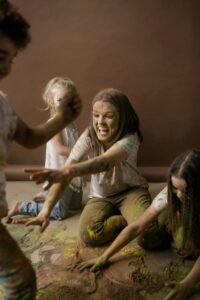
Touch, or “Tactile” Input: slime, foam, body or face paint, dry bean/corn/rice bins, play dough, finger paints, cooked/cooled/oiled pasta
Visual Input: go outside–this has positive effects on visual skills such as convergence, as well as nervous system benefits, limit screens, View Finders, kaleidoscopes
Auditory Input: humming, singing, making silly noises, playing musical instruments, listening to music (classical, binaural beats), wearing earplugs/headphones for sensitivity
Taste and Smell Input: smelling and/or tasting fresh citrus, spicy foods, complex flavors in Asian, Mexican, and Indian cuisines, smelling essential oils in a nasal inhaler
If your child is working with an occupational therapist, have them help you create or update their sensory diet. If not, it may be helpful to identify the most challenging time of your child’s day, and then begin to try to work in some of the above suggestions. It’s especially important to work in the muscle work/heavy work activities throughout the day, as a preventative measure. If your child is getting enough of this, it can really help to even out meltdowns and improve overall regulation.
If you have tried some sensory strategies that are not working (and you will know, if they are bored or overwhelmed, become silly and/or unregulated), use heavy work/muscle work, as this sense is very grounding and regulates us if we are tired/sleepy AND if we are overwhelmed or overstimulated. Another good time to use heavy work is just before bedtime.
A note on “play wrestling”. Although this is heavy work, it can quickly overwhelm a child. If you notice that your child is seeking this out, but becomes overwhelmed and even aggressive, pull back. They may be working though the Moro primitive reflex (fight or flight). Opt for things like using a punching ball or bag (with gloves), burpees for older kids, cartwheels, animal walks (like crab or bear) or wheelbarrow walking.
Know that there is always a bit of trial and error when coming up with these activities. What works one day, may not work another day. While children do like routine and predictability, variation and novelty is also good for the brain as well, paradoxically. Try to stay flexible and give your kids 2-3 limited choices of something in each area when exploring what might work for them. Another idea is to have a visual chart with some of the ideas posted in plain view so that they can make a choice.
And try to take as much opportunity to play with your kids. Truly play. No phone, no computer or tablet. Enjoy even a small amount of time to connect with them each day. This is another ingredient to helping your child meet their threshold; often times they are looking for connection and co-regulation with YOU. And if you are finding that you need some adult sensory strategies, check out my blog post for The Energetic Heart this month. Take care, and be well!
Autistic Burnout: What it Looks Like and How to Support It
There is a lot of talk about autistic burnout in the neurodivergent communities right now. This can happen for both children and adults on the spectrum. If someone is not diagnosed with autism, this may look like dissociation, shut down, and/or depression. As we learn more and more about the autistic brain and how it functions, we can begin to see the crossover with mental health issues.
A person can get autistic burnout from being in environments that have excessive demands that put a lot of pressure on a nervous system that is wired differently. If there is a constant push for a child to fit into a particular mold (often seen in school situations, especially public school), or if there is a lot of chaos in the home situation with siblings and/or parents, or an otherwise high level of demand to perform or behave a certain way from a parent may be exhausting to someone with autism. Also, simply having to constantly navigate unclear social expectations and change in routine can be exhausting and overwhelming for a person on the autism spectrum.
Autistic burnout can have many characteristics. An intensification in any of these things that is beyond what is usual:
Sensory overwhelm: this can include heightened sensitivity to sounds, visual stimulation, clothing textures, foods (leaning into strong food preferences), smells, or movement.
Increase in rigid behaviors: inflexibility with changes in routine, wearing specific clothing, eating specific foods, attempts to control social behaviors (like dominating rules of games, need to win, dictating what happens between friends in social circles, rejection of siblings)
Intensification of behaviors: this may include social withdrawal, stimming behaviors (flapping, spinning, lunging, rocking, etc), increase in intensity. or duration of meltdowns, moving into only one room and isolating
Emotional changes: highly volatile, reactive, anxious, depressed, loss of interest in things that are normally enjoyable.
Exhaustion: unable or unwilling to get out of bed, little to no willingness to participate in activities of daily living (such as bathing, eating, brushing teeth, changing clothes)
If your child is experiencing any of this and has sensory challenges or is on the autism spectrum, you can take certain steps to help them.
Immediate supports for the acute phase:
Reduction of demands: allow for rest, give space
Encouraging journaling or art to express and release heavy emotions
Using essential oils or natural scents to create a quick shift of mood
Using an ice cube on the bridge of the nose or face as a reset
Quick, short burst of exercise/activity; outside is best such as walking a pet, walking to the park or playground
Nourishing foods as much as possible, and mood boosting supplements like B and D vitamins, magnesium, 5HTP, vitamin C, probiotics, omega 3s
Long term supports to help keep burnouts from happening:
Therapeutic support: occupational therapy and psychotherapy can help over the long run
Healing foods, supplements + medications
Prioritizing intermittent breaks, rest, and self care
Setting up accommodations in school through an IEP or 504
Setting up regular outlets for movement, focusing on muscle work such as climbing, riding a bike, hiking, and jumping on a trampoline
Autistic burnout is real. If your child is acutely experiencing this, please try the suggestions for acute management. If your child is not experiencing burnout, start applying some of the long term suggestions and get ahead of it. Most importantly, know the signs of burnout so that you can more quickly identify it and start applying some of these suggestions.
Helping Sensory Children In Colder Weather
We have all felt the desire to hunker down, rest, and cozy up as the colder weather arrives. And this is a necessary moment for us; to gather ourselves near the proverbial hearth, to eat the foods that we have harvested in the warmer months, and allow for rest and re-set.
Many children with sensory processing differences struggle with time and seasonal changes; the temperature changes, as well as the diminished sunlight and outdoor time. Especially those that need more movement who are in school environments who restrict outdoor time in colder months. Here are some ideas to make the most of the shorter and colder days with your sensory children.
Get in your daily dose of movement. We know that children benefit from movement; especially sensory children. Find ways to stay active in the winter when the days are shorter (as they are in the northern hemisphere). Make sure that your kids have gear to play in lots of kinds of weather; cold, wet, snowy. Walk to school (even part way), get to the playground, walk a pet, or play on the trampoline. Being outdoors is one of the best and most effective types of experiences, and it’s free.
Family outdoor time. Maybe it’s a hike, a brisk walk, or even walking the neighborhoods to see the holiday lights after dinner. Doing a nature scavenger hunt can also be fun–looking for pinecones and acorns.
Have some indoor movement alternatives. You don’t need to have a full on sensory gym in your home; you can use what you have around the house to construct mini obstacle courses: pillow cushions, broom sticks to jump over, step stools for height variation, and/or using rolled up socks or beaning babies to toss items into a bucket or laundry basket are a few ideas for ways that you can use what you have. (See below for an some at-home obstacle course tips)
Build cozy forts for nesting. You can use pop up tents, blankets, pillows, Flashlights may be fun for reading while in a fort.
Nutrition and vitamins for health. This is a great time of year to up vitamin C intake for the natural “sunshine”: think oranges, citrus fruits, elderberry. If you have a very picky eater, you may try gummy supplements of vitamin C or elderberry.
Epsom salt baths (for ages 4 years +). These warming baths can combat the colder weather and also help to soothe the nervous system with the magnesium. They are especially helpful after a cranky day.
Making homemade holiday cards. Go ahead and get messy! Work with a variety of mediums such as paints, crayons, cotton balls, glue and stickers. Incorporating sensory play into fine motor activities (such as crafting) is very stimulating for the brain.
Using tight fitting long underwear under clothing may help with the seasonal clothing changes. Many children have issues with the tactile nature of clothing when moving from wearing short sleeves to long sleeves or shorts to pants, or even tolerating wearing coats, hats or gloves.
Massages after bath with lotion or oil. Use the warmth of your hands to help massage lotion or oil into your child’s skin after bath time. This firm pressure touch is deeply healing and soothing for the nervous system. If your child is sensitive to your touch, you can have them rub it into their skin by themselves. This may also improve the toleration for various foods if your child is a picky eater.
Create a natural aromatic experience on the stovetop. You can warm apple cider or a milk product with cinnamon, orange peel, and star anise. Then you can add honey to sweeten (for milk based brew), sip on it and enjoy it. If your child is sensitive to smells, try using natural scents such as citrus and peppermint (essential oils should be handled by adults only, or used in a diffuser).
And, here are some tips for creating obstacle courses at home:
Find objects at home, such as cushions, pop up tunnels, step stools, broom sticks, empty laundry baskets, beanie babies, balloons, squishy toys, etc.
Allow your child to engage in the planning. This can be written or drawn, if you’d like to add some fine motor elements. If they have trouble planning (this may be indicative of issues with ideation–the ability to plan out an unfamiliar task), offer some ideas, and help them. The skill of ideation really improves with repeated practice of doing unfamiliar, or novel, tasks.
Novelty is key! If they have completed a course successfully a few times, ask if there is any way that they can change the set up to mix up the challenge. This is supportive for brain executive functions.
Bring in balance components such as walking on stools, and walking on a rolled up blanket–the long, thin way.
Bring in visual-motor components: have them place squishy toys, beanie babies or even rolled up socks around the course to pick up and throw into a laundry basket or bucket. This is highly impactful for the nervous system.
I hope that some of these tips are helpful for you to navigate the shorter days and colder weather. Sensory-rich play is so effective in helping children’s development. Make sure to put down your devices, and play with your kids this season! Adults need more play….
Sensory Seekers + Avoiders
Most people who know about sensory processing are familiar with the terms sensory seekers and sensory avoiders. These labels can be helpful to define seeking and avoiding behaviors, as can knowing that they are not mutually exclusive; one can be a seeker and an avoider, even within the same sensory system.
Before we break all of this down, let’s also discuss the 8 sensory systems that we are measuring, as OTs (and an additional “sense” that I look at):
Touch/Tactile: anything that touches the skin such as playing with messy materials, clothing preference, touch from others, textured foods
Vision: involves processing the visual environment, clutter, being attracted to bold colors vs. neutrals, lighting, navigating “busy” visual environments
Hearing/Auditory: includes navigating environmental situations with background noise, listening to music (preference for volume), being able to filter pertinent sounds/communication
Movement + Balance/Vestibular: includes being able to navigate heights, experiences with feet off of the ground (swings, etc), challenges with sitting still
Position/Proprioception: includes awareness of the body, intense experiences that stimulate the joints and muscles such as climbing, running, jumping, pulling, pushing
Taste/Gustatory: linked with smell/olfactory, includes textures, temperatures (both also linked with touch/tactile system), spicy, bland, sweet, sour flavors
Smell/Olfactory: linked to taste/gustatory, aversion to strong odors, can smell things others can’t, seeks smelling objects and/or food
Internal State/Interoception: includes a link to the homeostatic functions of the body organs such as thirst, hunger, heart rate, toileting needs, temperature, breath capacity, and also emotional state
Intuition*: involves being in tune with subtle aspects of self and environment, in tune with motives and emotions of others, being in tune with internal world (interoception) to decipher internal “signals” such as the gut instinct, being able to read others’ emotions/feelings
It’s also important to note that many of these senses work together. For example, as many of us who have had COVID have learned, smell and taste are absolutely connected. The movement/vestibular, auditory, and visual systems are also closely connected. The position/proprioception and vestibular senses are also connected. There are many other connections; these are just a few examples. It’s also important to note that the internal state/interocpetion and intuition are challenging to label into seeking and avoiding categories, but are important to be aware of as they play important roles in our lived experiences.
A sensory “seeker” is someone who seeks out different sensations, while a sensory “avoider” is someone who avoids different sensations. Here are some examples of sensory seeking and avoiding behaviors:
Loves textures, loves getting messy, playing with things like slime, putty, finger paints, and even playing with foods—->avoids textures, avoids getting hands messy, resists bathing/grooming, strong preference to soft clothing, loose waistbands
Wiggles, fidgets, can’t sit still, loves movement—–>fear of heights/swings, limited play on the playground, prefers running to climbing, tentative, watches others first
Likes busy, bright environments, OK with noise, likes to be loud—->prefers quiet environments, small groups, wears headphones to block noises, covers ears with loud sounds.
Likes exploring with spices, adventurous eater, places non food objects into mouth, PICA ——> Picky eater, likes a certain color, texture, or temperature of food, limited food choices, brand preferences (may be related to preservatives), ARFID.
To address the fact that a person can be a seeker AND an avoider, even within the same system, let’s consider an example. A person who is sensitive to loud, unexpected sounds (the auditory system) may also be noisy on purpose. This is a way for them to desensitize themselves to loud noise, while getting the benefit of the proprioceptive system (stimulation of the muscles around the lungs and intercostals to produce loud sounds, which also stimulates the Vagus nerve that elicits a relaxation response). It’s sort of like removing a bandage: it’s much easier to remove it yourself than to have someone remove it for you.
There can also be conditional issues that influence seeking and avoiding. If someone is stressed out, has had little sleep, has had insufficient food/nutrition, or is in a challenging situation, they may not be as able to tolerate things that they typically tolerate. Just as this is true for us, it is true for our children.
Another nuanced detail to this is that the founder of Sensory Integration therapy, Dr. A. Jean Ayres, noted that children tend to seek out the input that they need. I’ll add that they may not always seek it out appropriately (such as biting toys/clothes, or hitting others for the proprioceptive input to calm the nervous system). We also do see children seek out things to an extent that it ends up dysregulating them, and also those who avoid experiences that could actually benefit their nervous system. These are all factors that skilled OTs take into consideration when working with children.
Furthermore, this is why, as occupational therapists, we use detailed questionnaires, and look at behavior over a period of time, versus one time. We rely on the report or presentation of the child, as well as gathering information from teachers and caregivers to get a fuller picture of how to support children with sensory processing issues across a variety of environments. Based on these sensory “profiles” and how a child is presenting at any given moment, we can adjust our OT sessions depending on where the child is at in that moment, and knowing what might support them best.
This is one reason why planned interventions can be less effective than responding to the child’s needs in any given moment. Many parents of children with sensory processing issues understand that more “traditional” approaches, including discipline, simply don’t work as effectively with children with sensory processing issues. This is because we are basing our qualifications of “good behavior” on neurotypical individuals.
If you have a child who is a sensory seeker, it is important to give your child opportunities to safely get what they need. If you have a child who is a sensory avoider, it is important to try and introduce these experiences in a safe and non threatening way, and consider baby steps to be a big deal. If your child’s responses to sensory experiences are getting in the way of their home, school, or social life, it is recommended to seek help form an OT skilled in sensory integration, preferably Ayres’ Sensory Integration (ASI).
*I have added intuition as a sense; its not traditionally recognized as such
Are “Sensory” and Neurodiverse Children Empathic?
This is currently a question that people are getting more and more curious about. What if sensory sensitivities are also linked to empathic abilities? Let’s first define the word empath. Oxford Languages defines it as “a person with the ability to perceive the mental or emotional state of another individual.” As a highly sensitive (including sensory sensitive) person, I have experienced this first hand. But it is important to note that, for most of my life, I thought that was I was feeling was entirely my own. This could range from physical symptoms, to moods that suddenly appeared.
After becoming a mother, my empathic and intuitive abilities became very strong (I believe that this is more common than most would know), after having “turned them off” for over a decade to complete studies, and begin my career. When this occurred, I had been working with children for about 8 years as a therapist. I suddenly became curious about the sensory sensitive children I was working with. Could they too, be empathic like I am?
It is not secret that part of the presentation of neurodiversity–especially ADHD–comes with a lot of emotional dysregulation. These children (and adults) are deep feeling individuals. I have witnessed many children with sensory sensitivities have powerful emotional outbursts, sometimes referred to as “meltdowns”, that can be high in frequency, duration, or both. Sometimes these sensitive children even seem to become the “emoters” of–and for–the family: when the adults or older siblings are avoiding or otherwise unable to process their own emotions, for any number of reasons.
I often think of people with sensory sensitivities and neurodiversity (especially ADHD) as having huge antennae, that connect them to others, events, and more. I have seen these children seem to intuit/name/feel deeply what a peer is thinking, what they are feeling. I have witnessed children becoming overly concerned with how peers are feeling, especially if they are having a hard time–both in classrooms and in the therapy gym. This can, of course, extend to the home environment, with this playing out with family members as well. In my experience as a neurodiverse person, having biological neurodiverse children, and working with neurodiversity since 1997 is that many of these sensitive children seem to have heightened empathic ability. .
So, how can we help support our sensitive children who are empathic?
Provide plenty of opportunities to release stored emotion. This can include physical outlets, (such as sports and free play–especially play that engage a lot of muscle work), talking about feelings, journaling or creating art to release the emotions.
Ask: “Does this feeling belong to you, or someone else?” Your child might surprise you with an answer. If they don’t know, it’s OK. You can invite them to “Let any feeling that does not belong to you, leave your body.” (As an adult, I use “Return to sender with consciousness.”)
Create cozy corners, and safe spaces at home. I recommend creating a safe space in the main part of the house, as sometimes children want to be close to family when they are having a hard time. A safe space is NOT a time out. It’s a place to go to have some space to process intense feelings.
Time in nature. Getting outdoor play, going to the parks, hiking, etc. Nature is a great way for our children to ground their energy, release stored emotions, and be soothed. The natural elements are extremely healing, and supportive to our nervous system.
Clean water, clean food, sleep. This can be tricky for sensitive children. If your child has food avoidance or ARFID, you can try supplements to enhance their nutritional content. If they have sleep issues, limit screens, get a lot of physical input in the day, and consult with your therapist to help you create strategies and learn techniques for improved sleep and help with picky eating.
Things are intense for our deep feelers, our sensitive and neurodiverse children, our empaths. The sooner that you can identify and support your children, the better. Sometimes, when a parent/caregiver opens up about the possibility of their child being empathic, the children will just begin to share their experiences, unprompted. I have experienced this multiple times. Get curious, and see what happens.
The Power of Reframing Experiences for Your Child
As a parent, I completely understand (and have experienced, multiple times) just how challenging it is to witness your child struggling. Whether it is academically or socially, parenting a child going through hardship can trigger our own wounds, and, even with the best intentions, can send us into a reflexive response (fight, flight, freeze, or fawn) even in finding a “solution”.
We may want to go immediately into fix it mode. We may feel angry and want to address it with another parent or educator involved. We may want to bury our head and let our partner deal with it, possibly because it’s triggering our own wounds that have not fully healed.
Having my own children experience life (especially the painful parts) certainly brought up my old wounds as I witnessed them experiencing similar things that I did, that were really difficult. I think, even in the very early realization of what’s going on with our kids, it’s good to look at ourselves and our own responses as well as our children’s. While listening and supporting our children, it is very important to take the opportunity to get support to feel through our own pain and get any necessary support.
There is a lot of chaos in the world right now. When things in the external feel chaotic, is tends to trigger our own unhealed wounds. We may be more reactive, sensitive, or self-punishing. Our sensitive kids are certainly feeling this; even when we keep news to a minimum, and do our best to shield them of the harshness of reality. It’s just sort of, “in the background”.
It is so helpful to first listen to our children. You will likely hear a self sabotaging, or negative voice emerge about it. If this happens, it is a great opportunity for a reframe. But first, it’s important to listen and reflect back to them what they are saying (in a neutral voice). Validate their feelings, and then offer a different lens to view the situation through. This reframing can help stop the negative self talk, and unnecessary thought loops that can arise from challenging situations. It can be incredibly empowering for your child.
Here are some step by step things to try when your child is experiencing a challenging situation:
Notice your reaction to their experience. Are you going into fight, flight, freeze or fawn? Slow down. Have them repeat some details. Breathe. Breathe again. Take these moments to ground your own energy and calm your system.
Change the scenery. Ideally, go for a walk, or get outside into the garden. Move to another room. This simple action is incredibly effective for getting a new perspective. These actions help shift the visual system and also the body (if moving or going for a walk) which can immediately have a positive neurological impact.
Listen–without offering a fix. Embody the role of a reporter; repeat back the details.
Validate any associated emotions. This is simple, but often skipped.
Encourage a growth mindset. Instead of “I can’t”, encourage “I’ll try”.
Get curious by asking if there is anything that your child could have done differently. It is OK if they cannot think of anything.
Offer your own perspectives and stories to help provide examples. Children usually love to hear these stories; of how we also struggled, and shifted perspectives. This is a great tool also if your child is stuck. It will often help them to understand and be able to shift their own perspective.
Role paying can be helpful to fully map out how to handle challenging situations. This is especially effective for children who have any motor planning/praxis challenges. Literally, get up, move around, and play a part. Real time practice can really help–it’s like theatrical blocking (when actors memorize lines when moving around the stage or set) and helps lock in the memory.
In summary, tend to any wounds that you experience when your child is going through something challenging. It’s an opportunity for us to reframe our own painful experiences. Pause, and notice any inclinations to go into “fix it” mode. Breathe. Listen and validate your child. Meet the situation with curiosity. Offer your own stories and how you handled it. Reframing can develop the ability to take on various perspectives, and also the ability to move into more of a growth mindset.











.png)